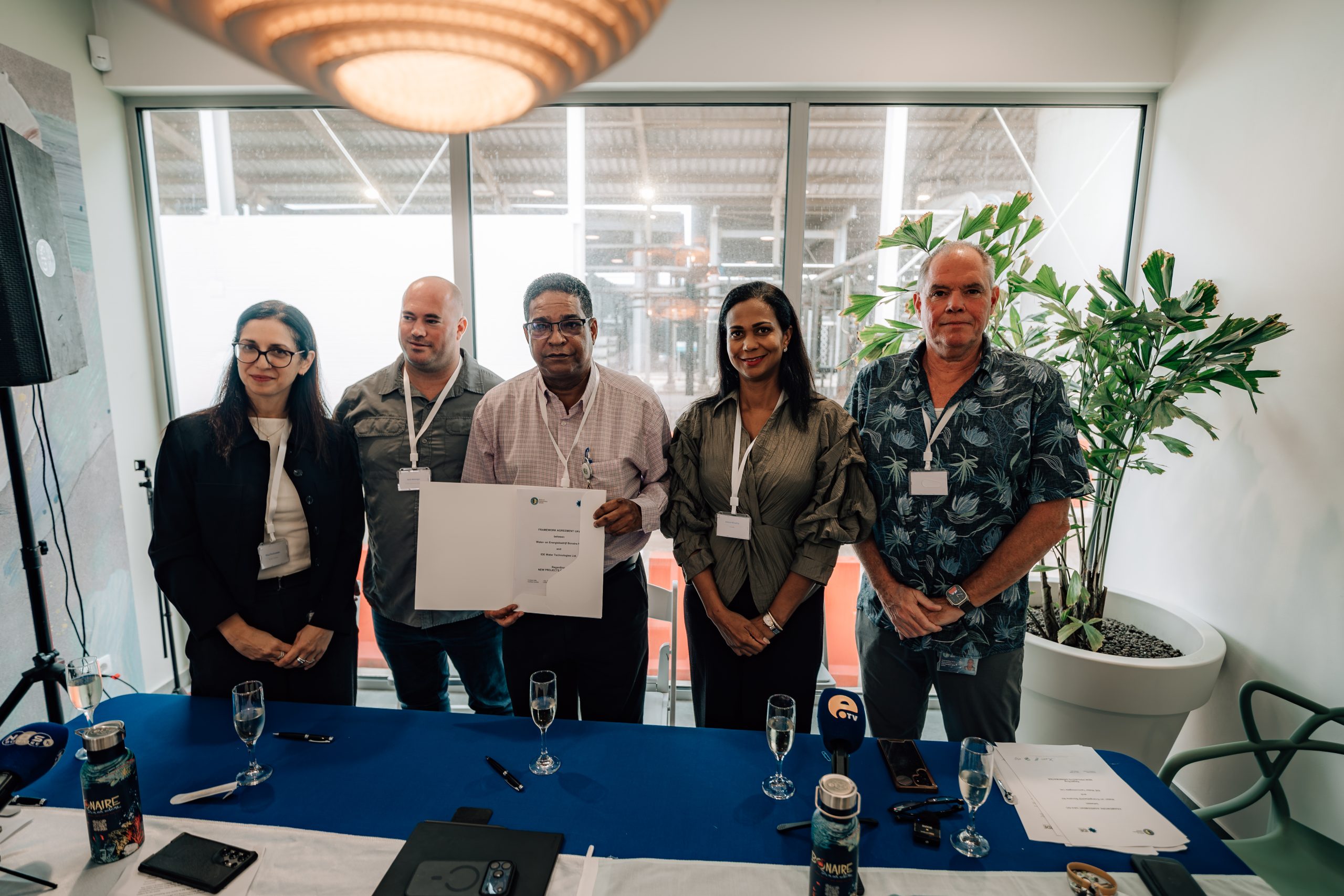

Kralendijk, 12 October 2026 – Water- en Energiebedrijf Bonaire (WEB) and Israel Desalination Engineering (IDE Technologies) have signed a new cooperation agreement.
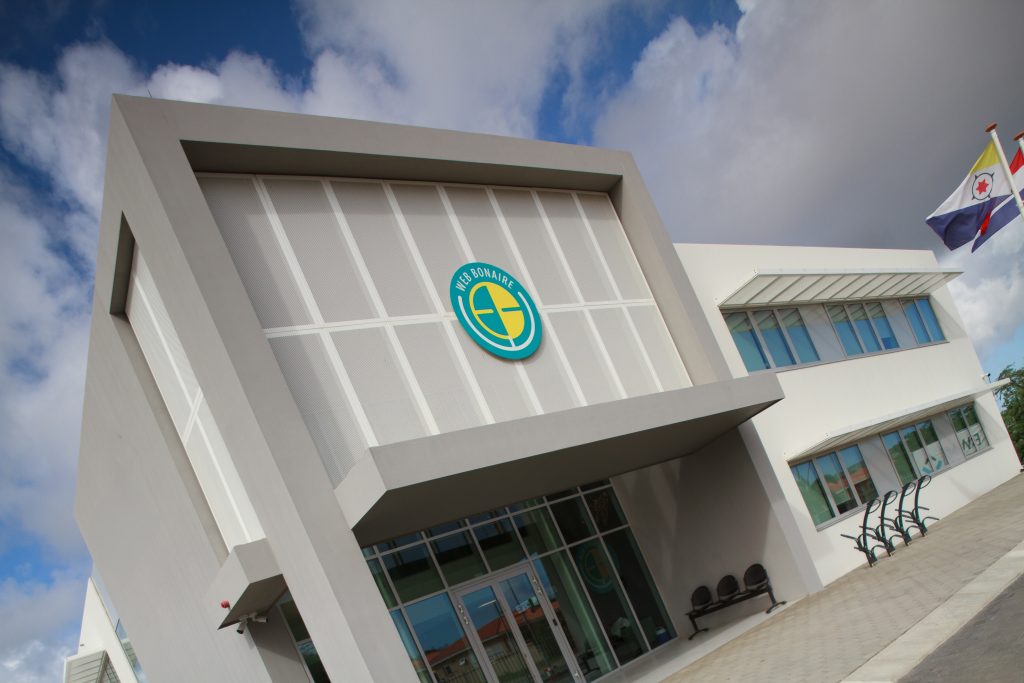
The agreement covers an initial period of up to five years. The signing ceremony took place at WEB’s water production facility in Hato, in the presence of invited guests, including the project team, BU-Water employees, a member of the Supervisory Board, representatives of both organizations, and members of the press.
WEB Bonaire has been working with IDE for several years. Until now, the cooperation has focused on individual projects. With this new framework agreement, both parties will establish a broader, long-term partnership focused on the development, design, and implementation of future expansions and upgrades to Bonaire’s drinking water production facilities.
More Drinking Water for a Growing Island
Bonaire is growing rapidly, and with this growth comes an increasing demand for drinking water. In recent years, demand has risen by more than 10% annually.
In 2021, WEB brought drinking water production fully under its own management with the construction of a new water production facility. The first expansion, adding 5,600 m³ per day, brought the total production capacity to 7,200 m³ per day. In 2024, the facility was further expanded by 2,400 m³ per day, increasing the current production capacity to 9,600 m³ per day.
However, demand continues to grow. WEB therefore aims to increase production capacity to 14,400 m³ per day over the next four years. This would double the production capacity compared to 2021.
To manage this growth in a structured and future-oriented manner, WEB adopted a modular expansion strategy in 2019. By increasing production capacity gradually through individual modules, WEB can respond to the growing demand for drinking water in a timely manner while carefully aligning investments with Bonaire’s development.
Drinking water is produced from seawater using a process called reverse osmosis. During this process, seawater is forced under high pressure through extremely fine membranes that remove salt while allowing water to pass through.
WEB carries out this process in a sustainable manner. In 2019, WEB decided that drinking water production should be entirely chemical-free. Instead of using chemicals to clean the membranes, they are maintained through mechanical cleaning methods. This prevents the use of chemicals that could harm marine life.
In addition, WEB continuously explores opportunities to make the production process even more sustainable and reduce energy consumption.
What Is Planned?
In addition to expanding reverse osmosis capacity, several other components of the drinking water production process will be upgraded and expanded in the coming years.
These planned activities include:
- Expansion of reverse osmosis capacity in Hato: Increasing the facility’s capacity to enable WEB to produce more drinking water.
- Upgrading and expanding the post-treatment facilities: During this final stage of production, the treated water is adjusted to achieve the required composition and quality before being distributed to customers as drinking water.
- Upgrading and expanding the seawater intake and discharge systems: The intake system supplies seawater for drinking water production, while the discharge system returns the remaining concentrated saline water to the sea.
- Additional infrastructure improvements: Other activities necessary to ensure that the drinking water supply keeps pace with Bonaire’s development, including modifications and expansions to pipelines and related infrastructure.
Where possible, WEB will collaborate with local companies to carry out these activities.
Sustainable drinking water production grows alongside Bonaire
Together with IDE Technologies, WEB will continue to expand drinking water production step by step through its modular expansion strategy, while upgrading existing facilities where necessary.
Through these investments, WEB is strengthening a reliable, sustainable, and future-ready drinking water supply that supports Bonaire’s continued growth and development.